

The following text has been extracted and edited from my book The Songs of Genesis: A Complete Guide to the Studio Recordings (McFarland):
Work began on writing The Lamb Lies Down on Broadway in May 1974 following the completion of the Selling England by the Pound tour. The band had made the conscious decision to write a concept album with songs linking to form an overall story. This would advance the approach explored in “Supper’s Ready” [on 1972’s Foxtrot] to its natural conclusion. Various ideas were shared before the band finally settled on Gabriel’s allegorical and surreal story of self-discovery set in New York City-based around a Puerto Rican kid named Rael.[1] Gabriel had fought his corner, believing his proposal to be the strongest – particularly when compared to Rutherford’s suggestion of adapting Antoine de Saint Exupéry’s kid’s story The Little Prince.[2] Gabriel was keen to set the story around a contemporary, street-wise, figure rather than a character from fables. He took his influences from a variety of sources including Swiss psychologist Carl Jung, the musical West Side Story, the 1678 novel Pilgrim’s Progress and the 1970 symbolic western El Topo. Gabriel explained: “The first idea came from when I was in New York and it was just a dream. It sounds interesting when you go back over the day and you start dreaming through some of the events, but your mind starts pulling in other things that you didn’t see the first time around. And there were other sort of bits of dream images and sounds. It sounded just like an abstracted story, which I sort of put together.”[3]

The story is so dense that no one, including Gabriel himself, can adequately convey its meaning. It comes across more as a collection of dreamlike lyrical images than a cohesive narrative. Over the years, many in-depth books and essays have been written analysing Gabriel’s concept. Its wilful obscurity has been its pull. Despite its baffling story, Rutherford later acknowledged the wisdom of going with Gabriel’s proposal,[4] although Banks still feels it is the weakest thing about the album in has often stated that it doesn’t engage him personally. Collins simply stated when asked, “I don’t know what it’s about. I’m just the drummer. Ask Peter…”[5]
Having submitted his story proposal and obtained the group’s consent, Gabriel insisted on writing all the lyrics himself. The band had previously split the writing of lyrics between each of them, so the singer’s demand for a monopoly led to some initial reluctance before finally being agreed. Whilst Gabriel developed the story framework for his lyrics in a separate room with a piano to help write melodies, the rest of the band wrote the music in another. In this very moment, Genesis had physically divided themselves and the seeds of discontent that would lead to Gabriel’s eventual departure had been sown.
The bulk of the writing for the album was completed at Headley Grange – a large but rather rundown poorhouse built in 1795 situated in East Hampshire. It had previously been used by Led Zeppelin as a base from which they would live, write and record songs and the band had worked on their Physical Graffiti album there. Zeppelin also sub-let the property to other bands. The last tenants before Genesis were The Pretty Things, who had just vacated the property. Genesis moved in with their families in mid-May 1974, with a lease on the property until the end of July. On arrival, they found it overrun with rats, that would scratch at the walls at night, and the band members were surprised at the almost derelict nature of the building. Zeppelin had warned Genesis that they believed the building to be haunted – no doubt providing inspiration for the eerie “The Waiting Room.” With rats in the rafters, the noises at night-time would have been disconcerting. The initial writing sessions went very well as Rutherford remembered, “We started writing and it just came out very easily. After the previous album, it was a big relief. We realised quite quickly that we had three good sides – not just two good sides and another side, but three good sides. So, we had to go for a double.”[6]
It was during the writing that Gabriel was approached by film director William Friedkin, who had recently made the acclaimed horror film The Exorcist, to work on some ideas for a future movie.[7] Friedkin had been impressed by the surreal nature of Gabriel’s story from the cover of Genesis Live, which fitted with his vision for revolutionising the film industry. The band were adamant that Gabriel was committed to them and to the album and that he should not take up the offer as it would effectively leave them in limbo. Gabriel, however, decided he could not pass on Friedkin’s offer and left the band to spend some time developing the project. After a couple of weeks away, Friedkin seemingly lost interest in the project and had become wary of the effect it would have on the band. Tony Stratton-Smith intervened and helped smooth the waters for Gabriel’s return to the fold. Rutherford managed to convince Gabriel a compromise could be struck for future ventures and the singer committed to finishing the album before embarking on any other side projects.
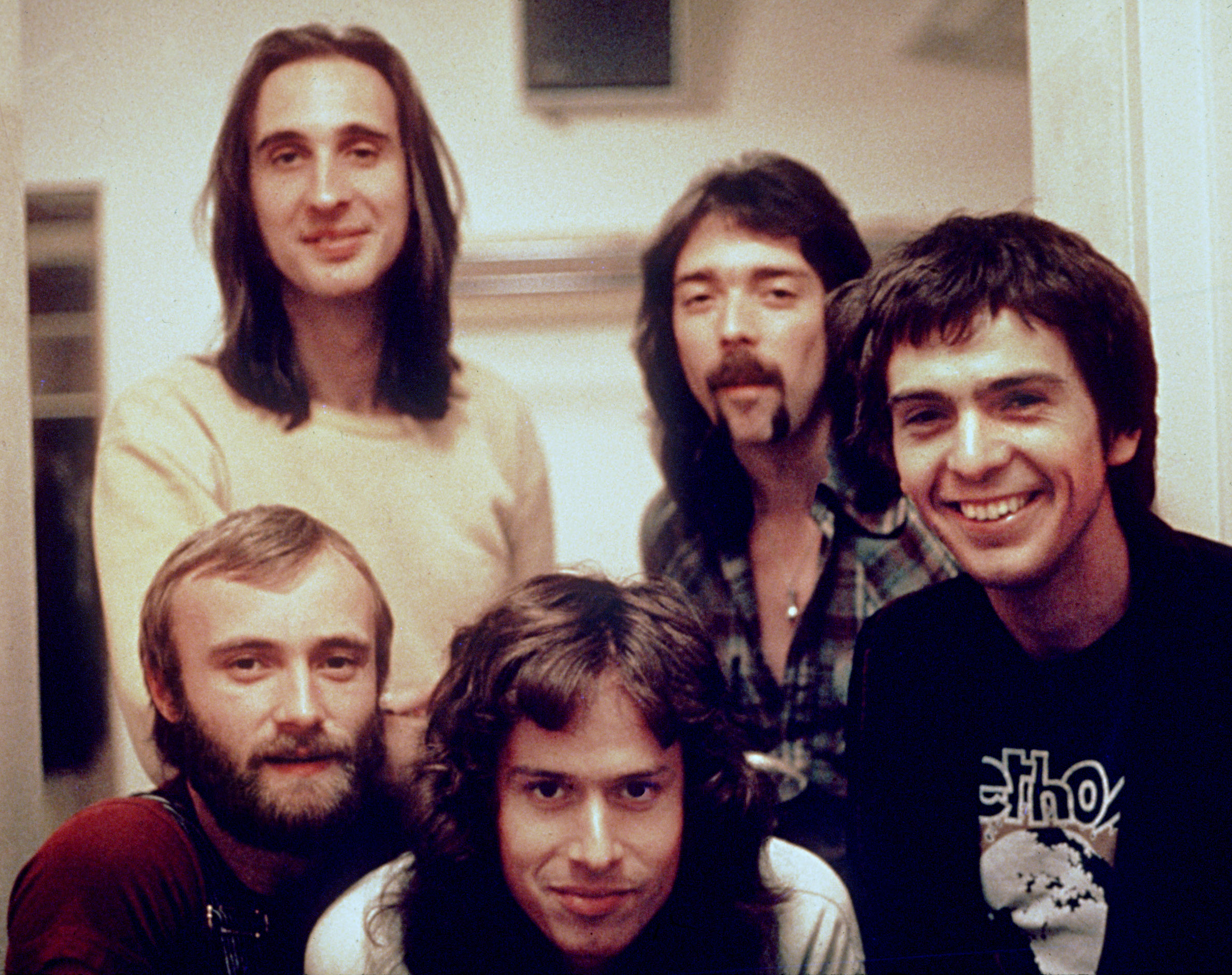
Banks, Collins, Rutherford and Hackett had written most of the music through jam sessions,[8] often based around a theme or lyrical idea, whilst Gabriel was further developing Rael’s story. Gabriel was struggling to keep pace with his writing of the lyrics and vocal melodies. He requested new linking pieces of music to be written to bridge elements of the story and initially refused the band’s offer of help with finishing the lyrics, rejecting suggestions from Banks and Hackett for “The Lamia” and “Here Comes the Supernatural Anaesthetist.” However, he would later relent, allowing Banks and Rutherford to work on “The Light Dies Down on Broadway.”
As the band’s lease at Headley Grange had run its course, Genesis moved to Glaspant Manor in South Wales in late July to record the album in a converted barn, later known as Swift Cottage. The band had hired The Island Mobile Studio,[9] using John Burns as producer and David Hutchins as Engineer. “It was basically a cowshed with a pitched roof,” Burns remembered. “I had to send out hardboard to nail up around the drums.”[10] The move away from using a dedicated recording studio freed the band up and they worked creatively with Burns. The location also allowed Gabriel to experiment with vocal sounds, using the natural acoustics of the outbuildings and rooms around the property. Collins also felt the location improved the sound of his drums, giving them more of a live feel.
Another event that alienated Gabriel from his colleagues was the birth of his first child, Anna-Marie, on 26 July 1974. Gabriel’s wife, Jill, had experienced a traumatic delivery and their daughter spent the first month of her life on an incubator. Gabriel spent long hours travelling to and from St. Mary’s Hospital at Paddington, which further slowed down the process of writing the lyrics for the album. Gabriel felt increasingly distant as the band showed little sympathy for his plight – none of them had children of their own at the time. He had also become increasingly frustrated with Banks not allowing him to develop musical ideas on the keyboards. Banks now readily admits he adopted a parochial attitude to the instrument, but at the time his lack of flexibility fuelled Gabriel’s discontent and frustration.
The final recording of the vocals and overdubs, followed by the mixing of the album, took place a month later at Island Studios on Basing Street in London.[11] This allowed Gabriel further time to complete his lyrics. Burns and the band worked around the clock to get the album finished. For the mixing, Gabriel and Collins took the evening/night shift and Banks, Hackett and Rutherford the day shift. The sessions remained tense with the band running up against time pressures created by the volume of music they had recorded and a forthcoming tour with a heavy production load.
During the mixing, the band learned that Brian Eno was in the upstairs studio recording his second solo album, Taking Tiger Mountain (By Strategy). Gabriel approached Eno and asked if he could treat some of his vocals through Eno’s computerised effects unit (he would also add some treatment to Hackett’s guitar). Eno agreed and in exchange, Collins played drums on Eno’s track “Mother Whale Eyeless”. Eno received a credit on The Lamb Lies Down on Broadway for his ‘Enossification’, something that irks Banks to this day as it suggests he took a larger role in the creative process than was the case.
With the mixing finally completed in mid-October, albeit hurriedly,[12] the band were ready to unveil their new concept double album.
 The Lamb Lies Down on Broadway was released as a double album on Friday 22 November 1974. Its gatefold sleeve, a photographic design by Hipgnosis which gives it the look of a graphic novel, was a move away from the painted covers of their earlier albums. It featured male model Omar as Rael with panels shot in black and white depicting scenes from Gabriel’s story – three on the front cover and three on the back. The story itself was printed in full on the inside gatefold with further shaped photographs depicting more of the story. The disc sleeves contained the lyrics. A new logo for the band was designed by George Hardie, using Greek lettering in an Art Deco style.
The album received mixed reviews on release in the music press. Barbara Charone in Sounds was one of the few offering a positive perspective stating, “The Lamb Lies Down on Broadway sticks out of the present vinyl rubble like a polished diamond.”[13] But many critics were bemused by the obscure and demanding storyline and density of musical ideas. Chris Welch, a big supporter of the band, commented in Melody Maker, “There is a vast amount of music to wade through, with some 24 titles and only a few themes worthy of such interminable development.”[14] Pete Erskins of New Musical Express noted, “The listener finds himself wading knee-deep in symbolism… In the process, the burden borne by the music causes it certain arthritic problems.”[15]
Gabriel had anticipated such a reaction, observing that critics had started to take a dislike to what they saw as the pretensions behind concept albums. As a result, the album was perhaps the most controversial of the band’s career, splitting opinion between those who thought it a masterpiece of inventiveness and those who dismissed it as an overblown, over-indulgent, sprawling mess. Gabriel’s story was so obscure that it could not be absorbed in just one sitting, and it required a commitment from the listener. It was therefore not surprising that the album was a relative disappointment, sales-wise, in the UK.
Over the years The Lamb Lies Down on Broadway has grown significantly in reputation and appreciation. Stephen Thomas Erlewine noted for All Music Guide, “it’s a considerable, lasting achievement.”[16] Jon Michaud, in an article on the album for The New Yorker magazine, commented, “While no one would ever mistake it for the first Clash album, there is far more grit to be found in The Lamb than in [Yes’s] Tales from Topographic Oceans.”[17] Classic Rock Review observed, “Serendipitously, it all came together with some truly brilliant moments both musically and lyrically.”[18]
As with many arguments, there are truths on both sides. There are several moments where the band’s creativity shines through. The main problem is that most of these are on the first disc. The music on the second disc is less exciting taken as a whole, although again there are moments of brilliance. It was difficult for the band to consistently keep the quality levels at the absolute pinnacle during what amounted to just over ninety-four minutes of music. Additionally, the band’s occasional need to turn to pieces written earlier in their career was further evidence of the rushed approach to completing the album.

The songs had a generally more electric and heavier slant than in previous work and their arrangements were brave and bold, showing Genesis was determined not to stand still. Gone were the twee acoustics and dynamically swinging epics. In their place came a collection of largely concise songs and musical moods that relied more on atmosphere and character to convey the surreal nature of the story. Tracks such as the title cut, the hauntingly melodic “Carpet Crawlers,” the blistering “Back in N.Y.C.,” the quirky “Counting Out Time” and the urgent “In the Cage” stand up very well on their own. This is largely due to the strength of the music and the individual nature of the musical approach to these pieces.
The album’s main weakness lies in its pacing. As noted, the first disc is excellent and taken on its own would stand as a tremendous piece of work. The second disc is almost universally inferior to the first. As such, the flow of the album does not work in its entirety as the story loses momentum and the listener starts to drift during some long, undulating sections. The album also lacks a satisfying climax, with “It.” coming across as a rushed conclusion. That said there is no doubt this album is one of the most important of the band’s career. It marks a sharp change in direction and a willingness to experiment with their compositional methods and sound. There are moments of inventiveness that produce some of the best music the band ever recorded, and it was a fitting last album for Gabriel. His vocal performance here was undoubtedly his strongest. Lyrically his single-mindedness had led him to becoming insular and a little too self-indulgent and obscure and it is of note that the band lightened up considerably after his departure. But Gabriel’s contribution to the growth of Genesis was enormous and here he made his most significant contribution.
After an initial and costly hiccup in October 1974 due to Hackett injuring his hand, which resulted in the initial UK leg being postponed until the following Spring, Genesis embarked on a long and ambitious tour on 20 November 1974 in Chicago. The album would be played in its entirety over 102 dates across the US, UK and Europe.
At the end of the tour, Peter Gabriel would leave the band.
THE LAMB LIES DOWN ON BROADWAY
Released: 22 November 1974. 2LP. Charisma. CGS 101
Producer: John Burns and Genesis
Engineer: David Hutchins
Recorded at Glaspant Manor, Carmarthenshire, Wales, with the Island Mobile Studio, and Mixed at Island Studios, August-October 1974.
Peter Gabriel – lead vocals, flute
Steve Hackett – guitars
Mike Rutherford – bass guitar, 12-string guitar
Tony Banks – keyboards
Phil Collins – drums, percussion, backing vocals.
Additional musician:
Brian Eno – “Enossification” on “In the Cage” and “The Grand Parade of Lifeless Packaging.”
All songs written by Genesis.
Album Tracks:
The Lamb Lies Down on Broadway
Fly On a Windshield
Broadway Melody Of 1974
Cuckoo Cocoon
In The Cage
The Grand Parade of Lifeless Packaging
Back In N.Y.C.
Hairless Heart
Counting Out Time
Carpet Crawlers
The Chamber Of 32 Doors
Lilywhite Lilith
The Waiting Room
Anyway
Here Comes the Supernatural Anaesthetist
The Lamia
Silent Sorrow in Empty Boats
The Colony of Slippermen
Ravine
The Light Dies Down on Broadway
Riding The Scree
In The Rapids
It.
NOTES/SOURCES:
[1] Gabriel had come up with the name Rael, through experimentation with the sounds of words, and thought the name would avoid any ethnic stereotyping. He hadn’t at that point realised that fellow English band The Who had also used the name for a ‘mini-opera’ on their 1967 album The Who Sell Out.
[2] Rutherford essentially The Little Prince as a children’s story aimed at grown-ups.
[3] Cheap Thrills. March 1977.
[4] Rutherford acknowledged in his memoir that he could see that the music could bring alive the imagery the story created. (Rutherford, Mike. The Living Years – The First Genesis Memoir. London: Constable & Robinson, 2014).
[5] Charone, Barbara. Rolling Stone. ‘Genesis: To Them It’s Only Rock & Role’. 2 January 1975.
[6] Fielder, Hugh. The Book of Genesis. London: Sidgwick & Jackson, 1984.
[7] Friedkin had also approached Tangerine Dream for musical ideas and Philippe Drier, one of the founders of Heavy Metal comic books in France, for design ideas. The sci-fi film would not materialise, but Friedkin went on to use Tangerine Dream on the soundtrack to his next movie, Sorcerer, released in 1977.
[8] Collins was chief archivist of the band’s writing and rehearsal sessions, using his Nakamichi cassette recorder to capture the sessions and help identify the strongest moments.
[9] According to Holm-Hudson (p52) the recording equipment used included: Two 3M 24-track recorders, a Helios Electronics 30-input mixing console, Altec monitors and two A62 Studers for mastering
[10] Easlea, Daryl. ‘Genesis: ‘I Was Aware There Was Something Going On With Peter…’‘ Prog, 18 November 2016. Retrieved 24 September 2018. https://www.loudersound.com/features/genesis-i-was-aware-there-was-something-going-on-with-peter
[11] Island Studios was based in a converted church in Notting Hill. There were two studios in the building, with the upstairs one being the best equipped. Genesis were using the studio downstairs.
[12] Tony Banks: “We never finished it properly, it was a rush job. It finalised the split between us and Pete, that’s certain.” (Jones, Cliff. ‘Genesis: Chapter & Verse.’ RCD, June 1994 (?))
[13] Charone, Barbara. The Lamb Lies Down on Broadway review. Sounds, 23 November 1974.
[14] Welch, Chris. The Lamb Lies Down on Broadway review. Melody Maker, 23 November 1974.
[15] Erskins, Pete. The Lamb Lies Down on Broadway review. New Musical Express, 30 November 1974
[16] Erlewine, Stephen Thomas. The Lamb Lies Down on Broadway review. All Music Guide. Retrieved 20 February 2019. https://www.allmusic.com/album/the-lamb-lies-down-on-broadway-mw0000650187.
[17] Michaud, Jon. The ‘Ulysses of Concept Albums’. The New Yorker. 28 February 2014. Retrieved 20 February 2019. https://www.newyorker.com/culture/culture-desk/the-ulysses-of-concept-albums.
[18] ‘The Lamb Lies Down on Broadway by Genesis’. Classic Rock Review. 31 August 2014. Retrieved 20 February 2019. www.classicrockreview.com/2014/08/1974-genesis-lamb-lies-down.